Connecting
Python with
LLMs
PyLadies Monterrey
May 9, 2026 | 12:30pm CT
Introduction
Overview
- What are large language models (LLMs)?
- Connecting Python with LLMs using chatlas
- Key features: providers, tools, streaming, and multi-modal input
- Practical examples and use cases
Quick introduction to LLMs
What are Large Language Models?
- LLM = Large Language Model
- AI models trained on massive amounts of text (books, websites, code)
- Can understand and generate human-like text
- Power tools you already use: ChatGPT, Claude, Gemini
- Today: Learn how to connect your Python code to LLMs
How do they work?

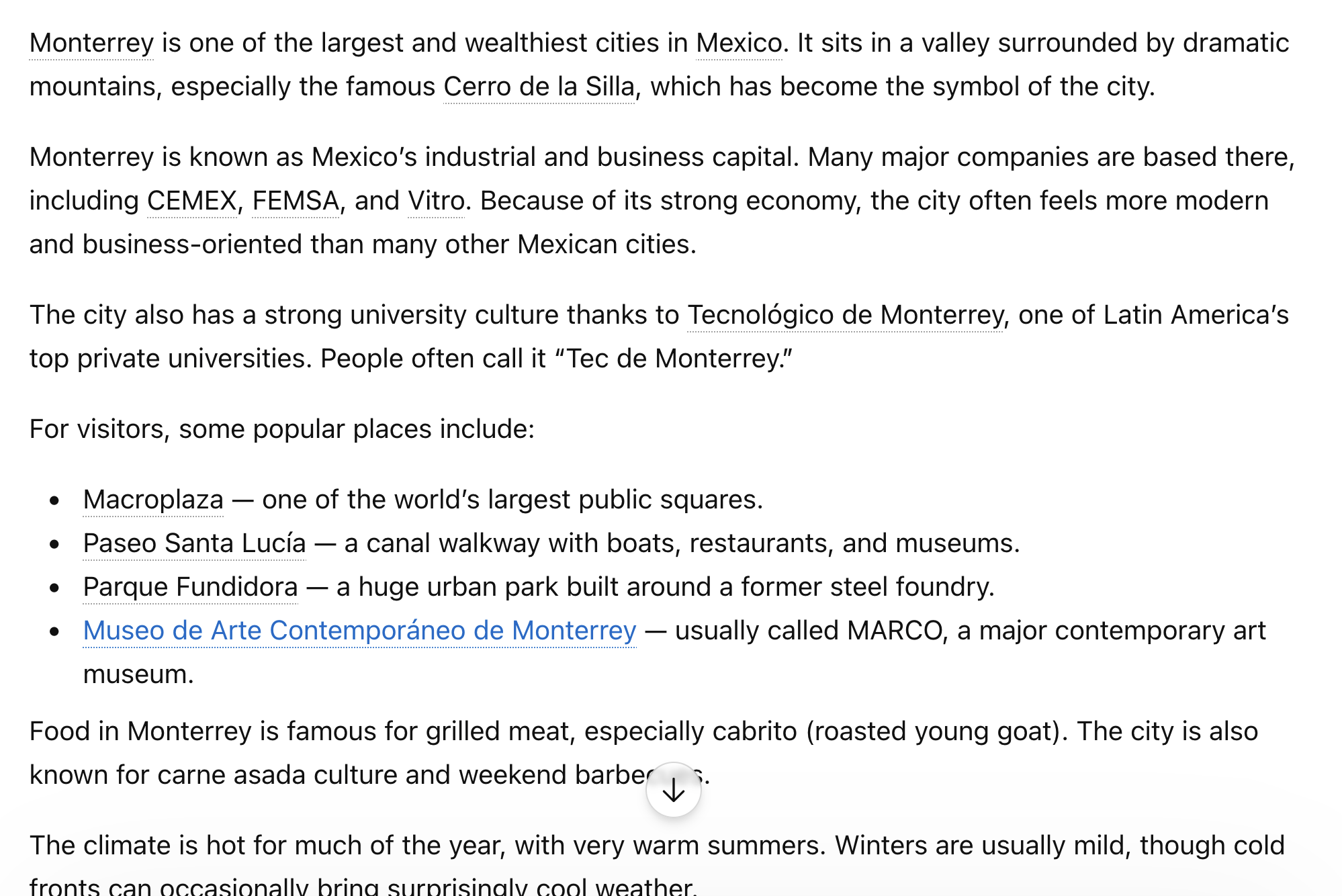
How do they work?
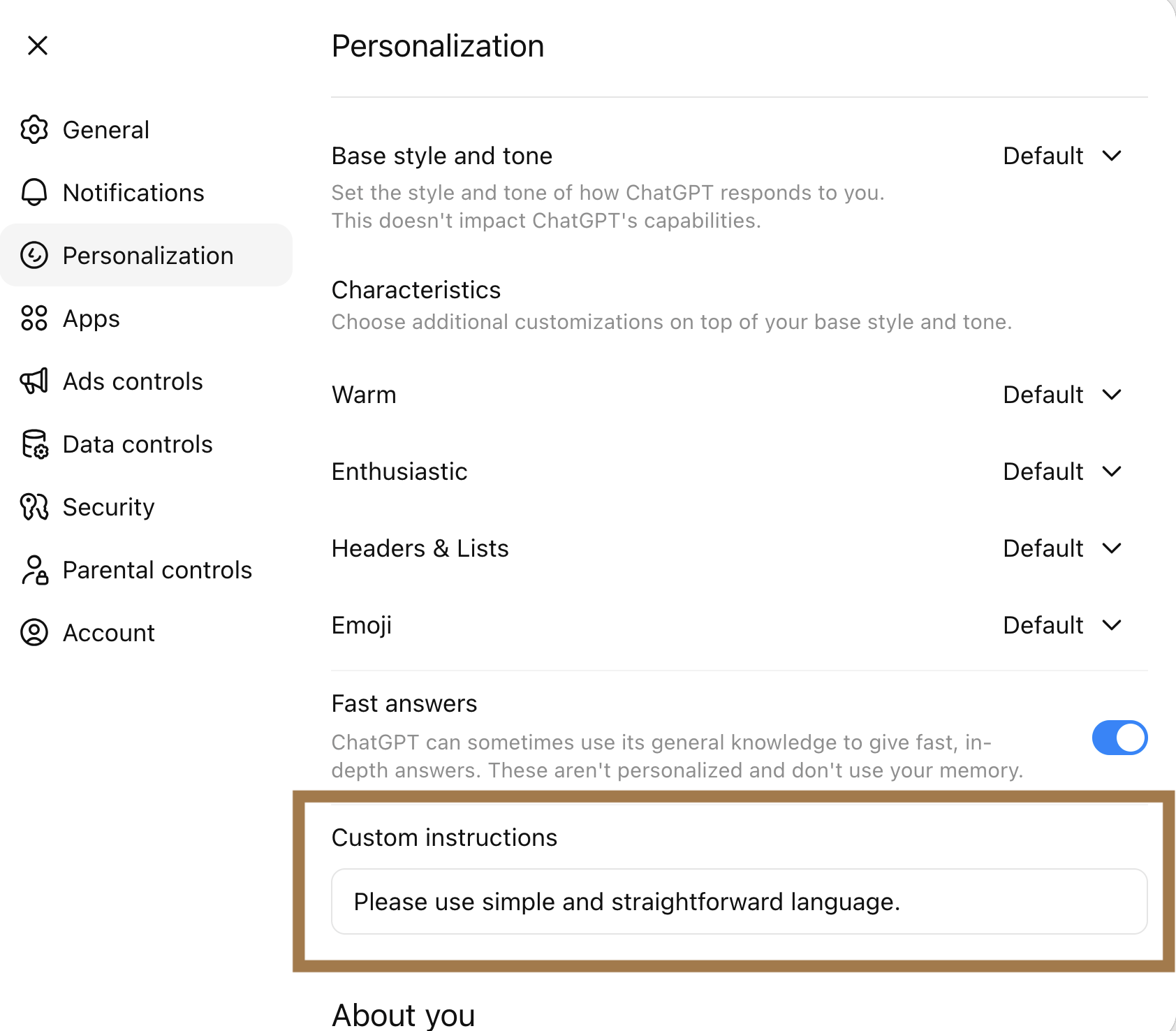
Message roles
| Role | Description |
|---|---|
system_prompt |
Instructions from the developer (that’s you!) to set the behavior of the assistant |
user |
Messages from the person interacting with the assistant |
assistant |
The AI model’s responses to the user |
Interacting with LLMs
Turn-based conversation
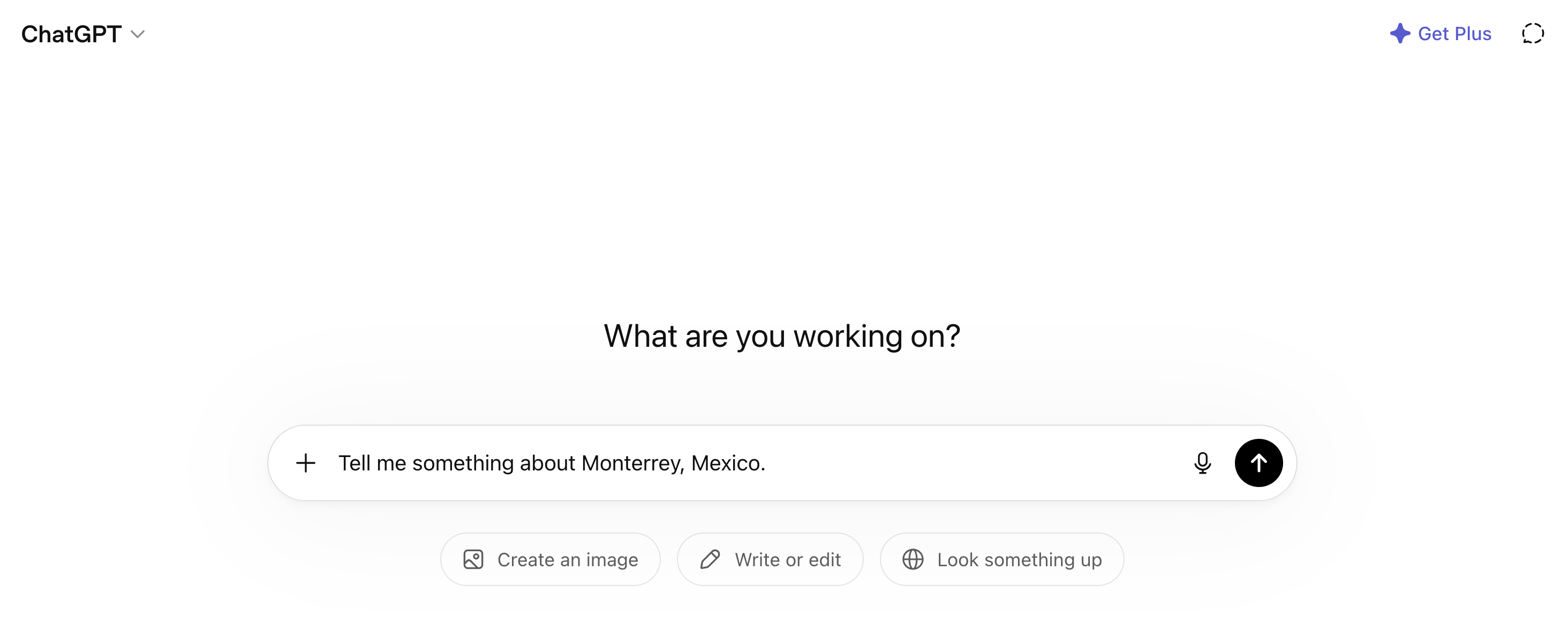
Programmatic chat clients
Programmatic chat clients
- Use provider SDKs (OpenAI, Anthropic, Google)
- LangChain
- LlamaIndex
- Haystack
- chatlas
Introducing chatlas

Why chatlas?
- Simple - Clean API, minimal boilerplate, quick to learn
- Multi-provider - Switch between OpenAI, Anthropic, Google, Ollama
- Tool calling - Let LLMs execute your Python functions
- Rich content - Text, images, PDFs, structured JSON
- Stateful - Automatic conversation history tracking
Using chatlas
Okay, let's dive into Monterrey, Mexico! It's a really fascinating and rapidly growing city with
a unique blend of industrial power, stunning natural beauty, and a thriving cultural scene.
Here’s a breakdown of what makes it interesting:

1. The Industrial Heart of Mexico:

 • Manufacturing Hub: Monterrey is the undisputed center of Mexico's automotive industry. It's
   home to the largest automotive factory complex in the world – the Grupo Ángeles (Angels Group)
   plant – which produces a huge percentage of vehicles sold in North America. This has made it
   incredibly important for Mexico’s economy.
 • Beyond Autos: However, Monterrey is diversifying. It’s a major center for manufacturing in
   glass, steel, and electronics, as well as food processing and pharmaceuticals.
 • Strategic Location: Its location on the Gulf of Mexico makes it a crucial trade and
   transportation hub for the region.

2. Stunning Geography & Landscape:

 • Mountains & Coastline: Monterrey sits in a valley surrounded by the majestic Sierra Madre
   Occidental mountains. The city offers incredible views of the coastline - the Bay of the
   Hudson.
 • Lake Rocío: A vast lake sits just south of the city, providing a scenic landscape and
   recreational opportunities.
 • Natural Parks: Nearby are national parks like El Chorro and El Macầu, offering hiking,
   birdwatching, and stunning natural areas.

3. Culture & Why It’s Becoming Popular:

 • Modern & Trendy: Monterrey has undergone a massive revitalization in recent decades,
   attracting a creative vibe and a young, stylish population.  It’s a place where you’ll find
   art galleries, trendy boutiques, and a lively nightlife.
 • Music & Arts: Monterrey has a booming music scene, with numerous venues hosting artists from
   various genres – rock, electronic, hip-hop, etc. The city is known for its creativity and
   musical energy.
 • Food Scene: The city's culinary scene has exploded in recent years. You’ll find a fantastic
   mix of Mexican cuisine, international flavors, and innovative restaurants.
 • Historical Significance: While known for its industrial pulse, the city has a rich history
   dating back to the 18th century, and there are some interesting museums and historic sites.

4. Some Key Facts & Statistics:

 • Population: Around 2.5 million (making it one of the largest cities in Mexico)
 • GDP: High, significantly contributing to Mexico’s overall economic growth.
 • Currency: Mexican Peso (MXN)

5.  Things to See & Do:

 • The Plaza Grande: The main square, bustling with activity.
 • The Museo de la Historia de Monterrey: A must-visit for history enthusiasts.
 • The "The Gate" Bridge: An iconic and impressive modern bridge.
 • The Rosedal Park: A massive park with a Japanese-style garden.
 • Museo de Arte Contemporáneo de Monterrey (MAC): A significant art museum.

Resources for Further Research:

 • Wikipedia - Monterrey: https://en.wikipedia.org/wiki/Monterey
• Mexico Tourism: https://www.visitmexico.com/city/monterreyAdding a system prompt
¡Monterrey es una ciudad vibrante en el centro de México, conocida por su fútbol, especialmente el equipo de élite. Tiene una rica historia colonial y una arquitectura impresionante, incluyendo el Palacio de Bellas Artes. También es un importante centro industrial y cultural, con una escena gastronómica notable.Using chatlas in the console
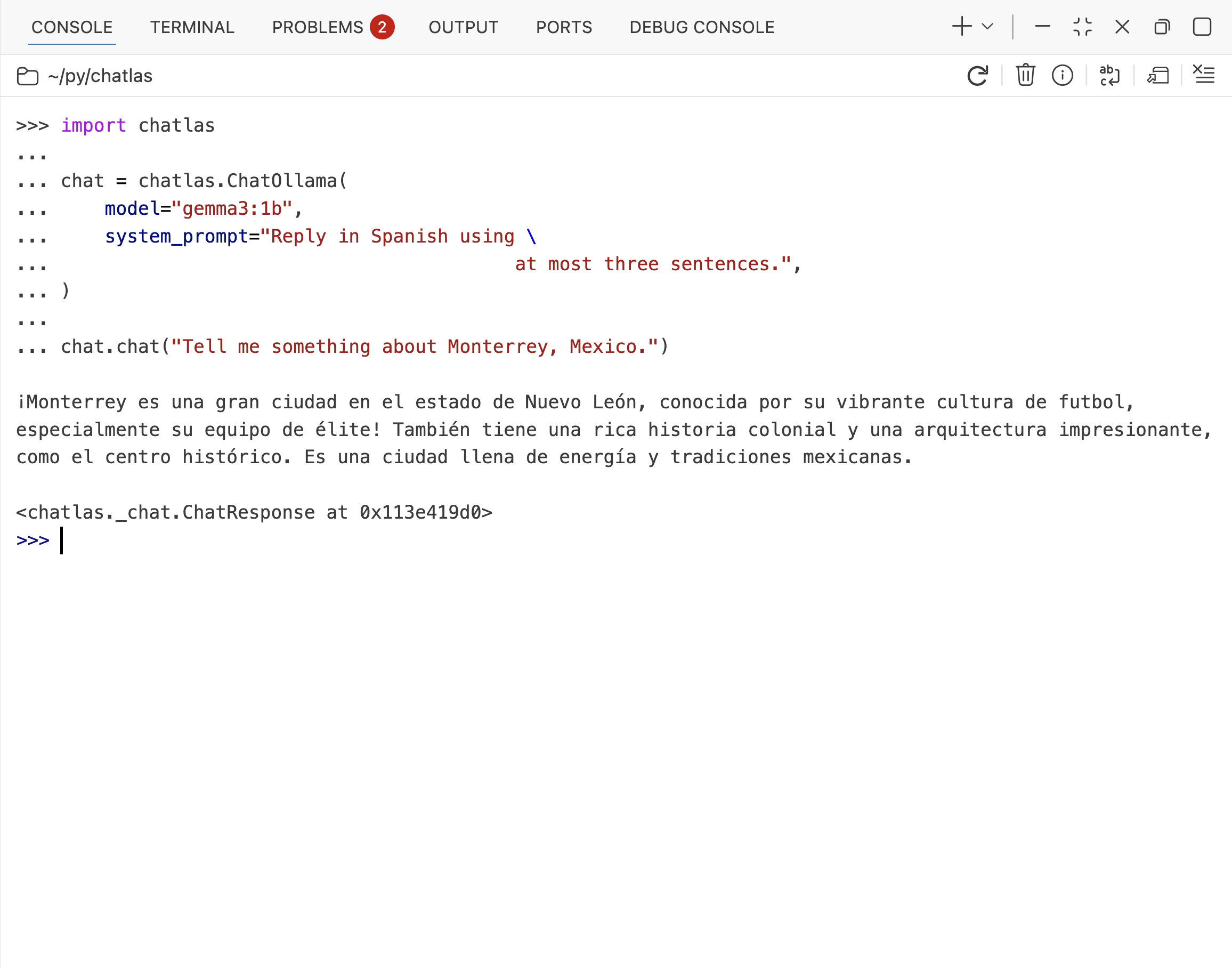
Using chatlas in a script
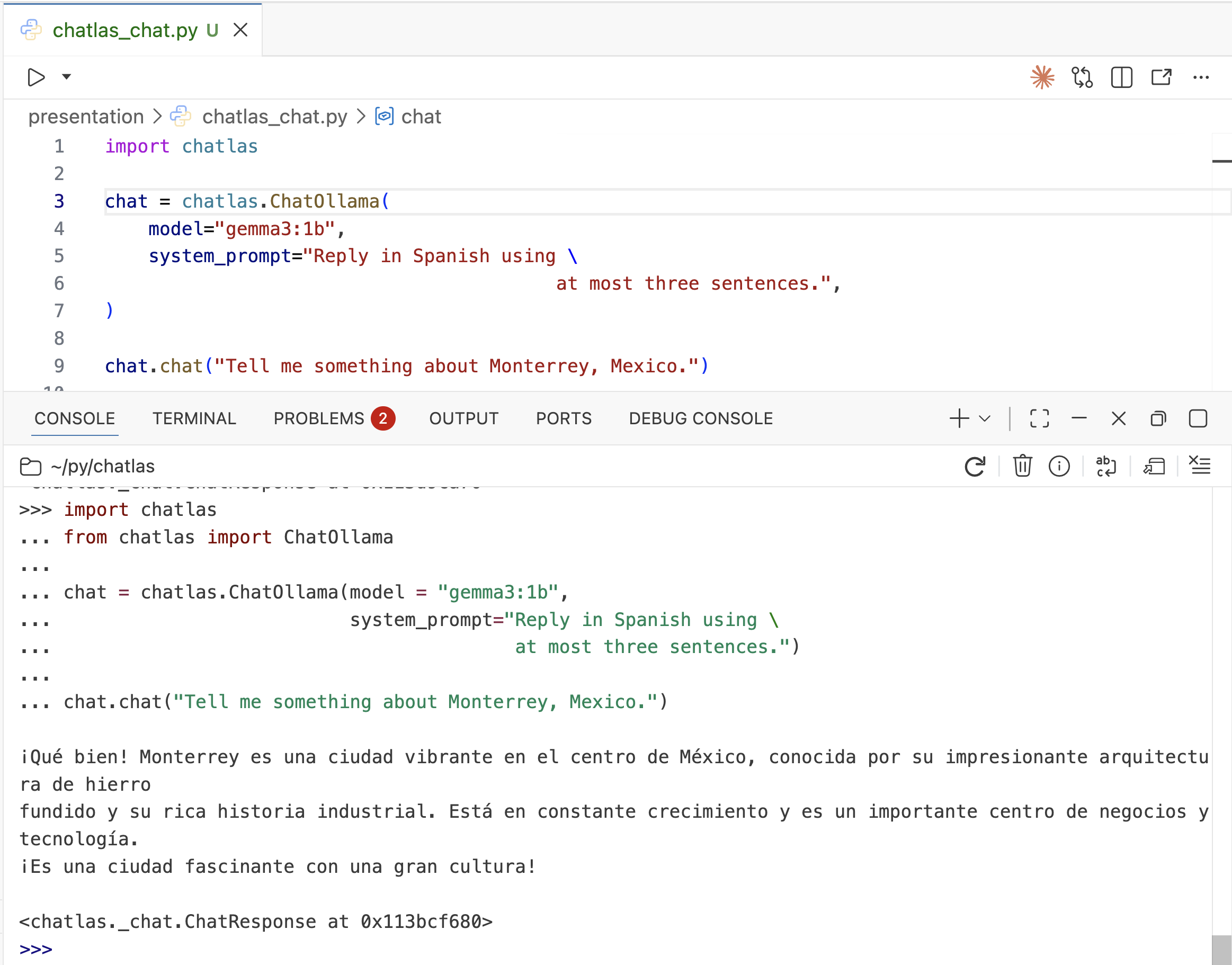
Using chatlas in a notebook
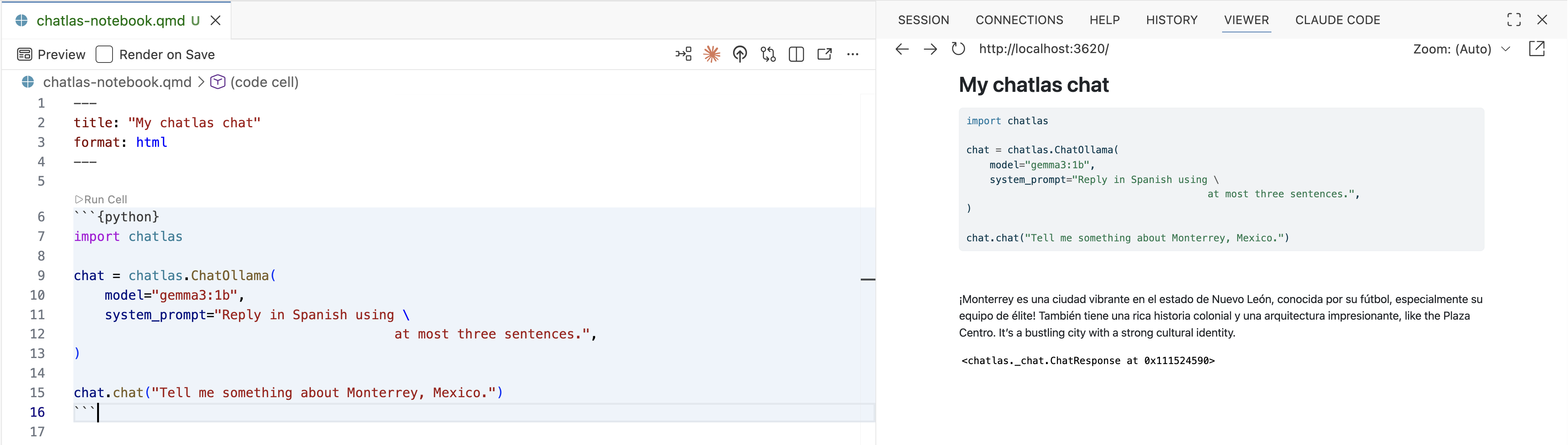
Providers and models
- Provider
- company that hosts and serves models
- Model
- a specific LLM with particular capabilities
| Provider | Example Models |
|---|---|
| OpenAI | gpt-4o, gpt-4-turbo, gpt-3.5-turbo |
| Anthropic | claude-3-5-sonnet-20241022, claude-3-opus-20240229 |
gemini-1.5-pro, gemini-1.5-flash |
|
| Azure OpenAI | gpt-4, gpt-35-turbo |
| Ollama | llama3.2, gemma2, mistral |
| Groq | llama-3.3-70b-versatile, mixtral-8x7b-32768 |
| Databricks | databricks-meta-llama-3-1-70b-instruct |
| Together | meta-llama/Meta-Llama-3.1-70B-Instruct-Turbo |
| Perplexity | llama-3.1-sonar-large-128k-online |
| GitHub | gpt-4o, claude-3.5-sonnet |
| Bedrock | anthropic.claude-3-5-sonnet-20241022-v2:0 |
How are models different?
- Content: How many tokens can you give the model?
- Speed: How many tokens per second?
- Cost: How much does it cost to use the model?
- Intelligence: How smart is the model?
- Capabilities: Vision, reasoning, tools, etc.
chatlas

Providers
ChatOpenAI()ChatAnthropic()ChatGoogle()
Local models
ChatOllama()
Enterprise
ChatBedrockAnthropic()
Multiple providers
Switch between LLM providers seamlessly:
Switching providers
import chatlas
import os
from chatlas import ChatAnthropic  # requires anthropic package

chat = chatlas.ChatAnthropic(
       model="claude-sonnet-4-6",
       api_key=os.getenv("ANTHROPIC_API_KEY"),
       system_prompt="Reply in Spanish using \
                   at most three sentences.",
)

chat.chat("Tell me something about Monterrey, Mexico.")
Monterrey es la capital del estado de Nuevo León y es considerada una de las ciudades más industriales y económicamente importantes de México. Es conocida por su impresionante paisaje montañoso, especialmente el icónico Cerro de la Silla, que simboliza la ciudad. Además, Monterrey es reconocida por su vibrante cultura, su gastronomía y sus importantes universidades, como el Tecnológico de Monterrey.Tool calling
Accessing external functions
I don't have access to real-time weather data, so I can't tell you the current conditions in Monterrey,
Mexico.

However, I can share that Monterrey typically has:

 • Hot summers (May-September) with temperatures often exceeding 95°F (35°C)
 • Mild winters (December-February) with temperatures around 50-70°F (10-21°C)
 • Low rainfall overall, though most rain falls June-September
 • Semi-arid climate with plenty of sunshine year-round

For current conditions, I'd recommend checking:

 • Weather.com
 • Weather apps on your phone
 • Local Monterrey news websites
 • Google weather search

Is there something specific about Monterrey's weather you'd like to know about?Accessing external functions
Create a tool function:
import requests
def get_current_weather(lat: float, lng: float):
"""
Get the current weather given a latitude and longitude.
Parameters
----------
lat: The latitude of the location.
lng: The longitude of the location.
"""
lat_lng = f"latitude={lat}&longitude={lng}"
url = f"https://api.open-meteo.com/v1/forecast?{lat_lng}¤t=temperature_2m,wind_speed_10m&hourly=temperature_2m,relative_humidity_2m,wind_speed_10m"
response = requests.get(url)
return response.json()["current"]Accessing external functions
Register and call the tool:
# 🔧 tool request (toolu_01MgUEzjRnY9Sx1TJREebgTJ)
 get_current_weather(lat=25.6866, lng=-100.3161)

# ✅ tool result (toolu_01MgUEzjRnY9Sx1TJREebgTJ)
 { 'time': '2026-05-09T13:00',
   'interval': 900,
   'temperature_2m': 23.1,
   'wind_speed_10m': 4.5}

The current weather in Monterrey, Mexico is:

 • Temperature: 23.1°C (about 74°F)
 • Wind Speed: 4.5 km/h (light breeze)
 • Time: 1:00 PM local time

It's a pleasant day in Monterrey with comfortable temperatures and light winds!Multi-modal input
Image input
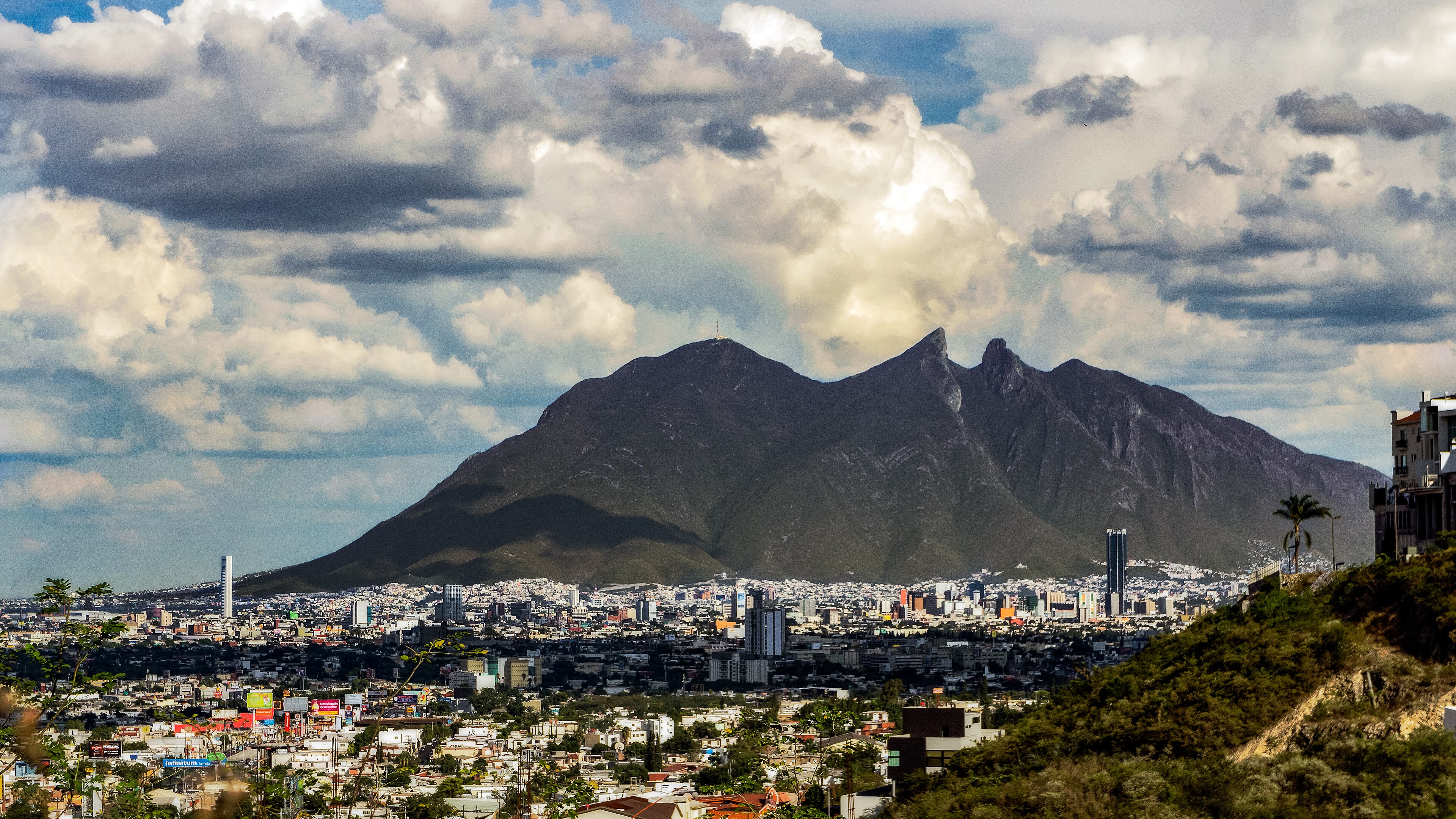
The image shows a scenic view of a city with a large volcanic mountain in the
background, on which a city is nestled. There's a clear sky above, and some
clouds are scattered. In the foreground, there appears to be a body of water
reflecting the sky. The photo seems to have been taken from a distance and
captures both urban development and natural landscape elements coexisting.PDF input
Main Findings

Context & Challenge

 • The Monterrey Metropolitan Area (MMA) is one of Mexico's top three GHG-emitting territories
   (30.34 MtCO₂e), with population doubling and urban area growing 2.8x between 1990-2020
 • Local governments lacked technical capabilities and sufficient data to support effective climate
   decision-making

Key Approach

 • Combined local climate data with Google's Environmental Insights Explorer (EIE) platform,
   alongside complementary tools (Maitec for mobility, Tecsb for green/solar technologies)
 • Engaged diverse stakeholders — government, private sector, academia, and marginalized
   communities — through workshops and participatory sessions

Main Outcomes

 • Generated more robust, data-driven information to support Climate Action Plans (CAPs)
 • Identified opportunities in solar energy potential, sustainable buildings, and low-emission
   transportation
 • Increased transparency and accountability in climate action planning
 • Contributed to better-informed public policies at both municipal and state levels

Critical Lesson

 • Stakeholder engagement was the most decisive factor for success — particularly identifying
   influential community members and including marginalized voices to ensure inclusive,
science-based climate targetsStreaming
Responding one chunk at a time
That
'
s
 a
 cool
 name
,
 Isabella
!
 It
 has
 a
 nice
 sound
 to
 it
.
 😊


Is
 there
 anything
 you
'
d
 like
 to
 talk
 about
,
 or
 were
 you
 just
 letting
 me
 know
 your
 name
?
Chat history
Remembering past interactions
Your name is Isabella! 😊 I asked you what your name was earlier.

It's a bit of a trick question! 😄

Would you like to tell me something about yourself, Isabella?Practical examples and use cases
Example: Batch document summarization
Process dozens of research papers and create a summary CSV:
from pathlib import Path
from pydantic import BaseModel
import pandas as pd

chat = chatlas.ChatGoogle(model="gemini-1.5-flash")

class Paper(BaseModel):
    """Extract key information from this research paper."""
    title: str
    authors: list[str]
    year: int
    key_findings: str  # 1-2 sentences

# Process all PDFs in a folder
papers = []
for pdf_path in Path("research_papers/").glob("*.pdf"):
    result = chat.chat_structured(
        chatlas.content_pdf_file(pdf_path), data_model=Paper
    )
    papers.append(result.model_dump())

# Save to CSV for analysis
df = pd.DataFrame(papers)
df.to_csv("paper_summaries.csv", index=False)Creating a chatbot with chatlas with Shiny
Creating a chatbot with chatlas with Shiny
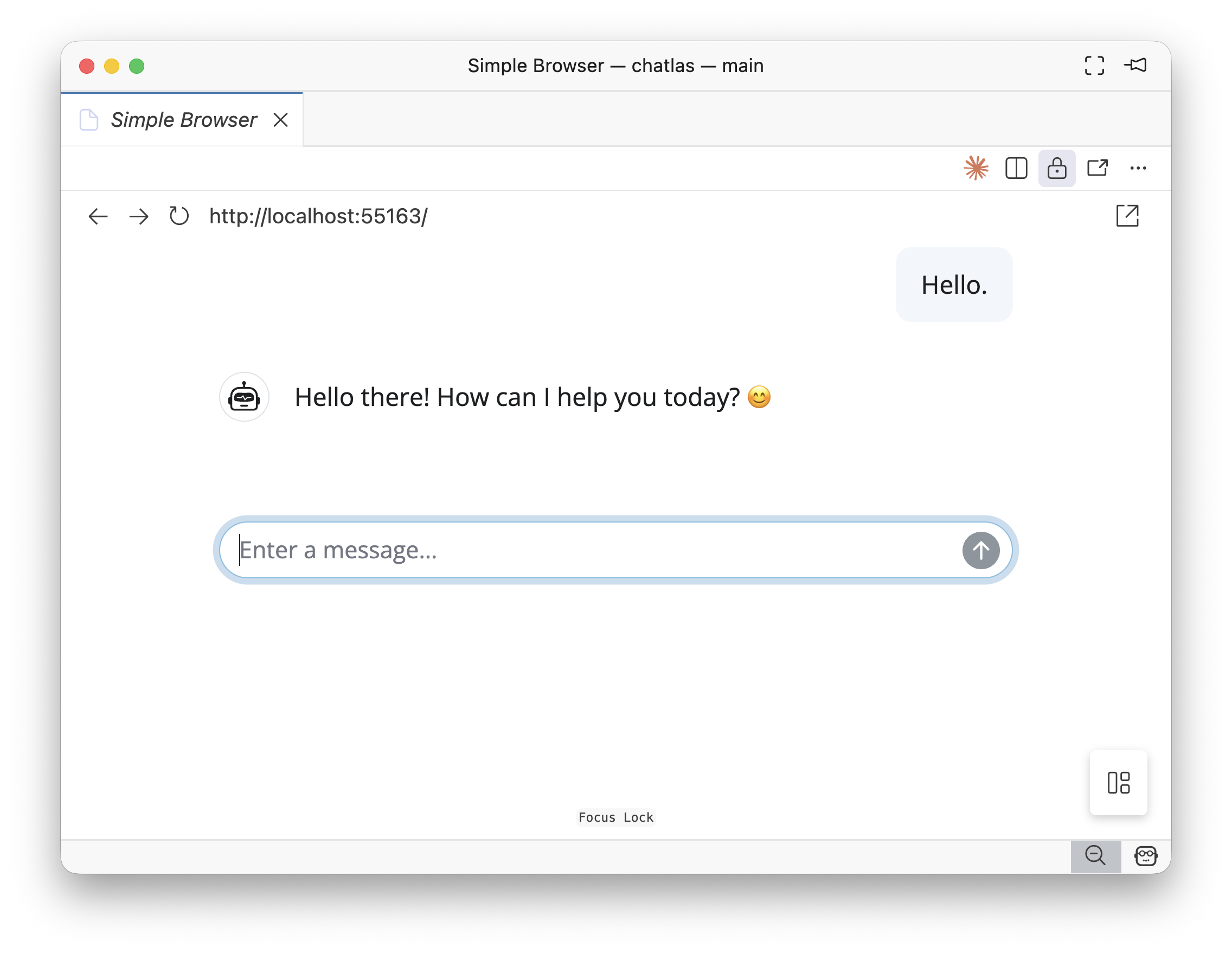
Why build with chatlas?
Generic chatbot (ChatGPT, Claude):
❌ Can’t access your local data
❌ Can’t query your databases
❌ Can’t integrate with your APIs
❌ Can’t automate workflows
Custom chatbot with chatlas:
✅ Works with YOUR data
✅ Integrates with YOUR tools
✅ Automates YOUR workflows
Example: PyLadies Monterrey event assistant
What if you could ask questions about local events?
- “What events do we have about AI?”
- “Tell me about the TEC de Monterrey venue”
- “What’s our average event attendance?”
This requires integration with local data!
Connect the chatbot to your data
app.py
# Your local event database
EVENTS = [
    {
        "name": "Python & LLMs Workshop",
        "date": "2026-05-09",
        "location": "TEC de Monterrey",
        "attendees": 45,
        "topic": "chatlas and AI"
    },
    # ... more events
]

def get_upcoming_events(topic: str = None):
    """
    Get upcoming PyLadies Monterrey events.

    Parameters
    ----------
    topic : Filter by topic (e.g., "AI", "data", "web")
    """
    return [e for e in EVENTS if topic.lower() in e["topic"].lower()]

chat = chatlas.ChatAnthropic(model="claude-sonnet-4-5")
chat.register_tool(get_upcoming_events)

# Now it can answer questions about YOUR events!
chat.chat("What events do we have about AI?")
The chatbot uses your function
# 🔧 tool request
 get_upcoming_events(topic='AI')

# ✅ tool result
 [{'name': 'Python & LLMs Workshop',
   'date': '2026-05-09',
   'location': 'TEC de Monterrey',
   'attendees': 45,
   'topic': 'chatlas and AI'}]

¡Hay un evento sobre IA! Es el "Python & LLMs Workshop" que se
llevará a cabo el 9 de mayo de 2026 en el TEC de Monterrey.
Ya hay 45 personas registradas. ¿Te gustaría más detalles?Building custom chatbots with Shiny
Add the tools to a Shiny chat interface:
from chatlas import ChatAnthropic
from shiny.express import ui

# Create chat UI
chat = ui.Chat(id="chat", messages=[
    {"role": "assistant",
     "content": "¡Hola! Ask me about PyLadies Monterrey events!"}
])
chat.ui()

# Create chatbot with registered tools
chat_model = ChatAnthropic(model="claude-sonnet-4-5")
chat_model.register_tool(get_upcoming_events)
chat_model.register_tool(get_venue_info)

@chat.on_user_submit
async def handle_user_input():
await chat.append_message_stream(chat_model.stream(chat.user_input()))Demo time!
PyLadies Monterrey Event Assistant
Other use cases
- Data analysis: Query databases, generate reports
- Document processing: Extract info from PDFs, summarize research
- API integration: Check weather, send emails, post to Slack
- Workflow automation: Schedule tasks, monitor systems
- Custom agents: Code review bots, customer support, tutoring
Packages that work with chatlas
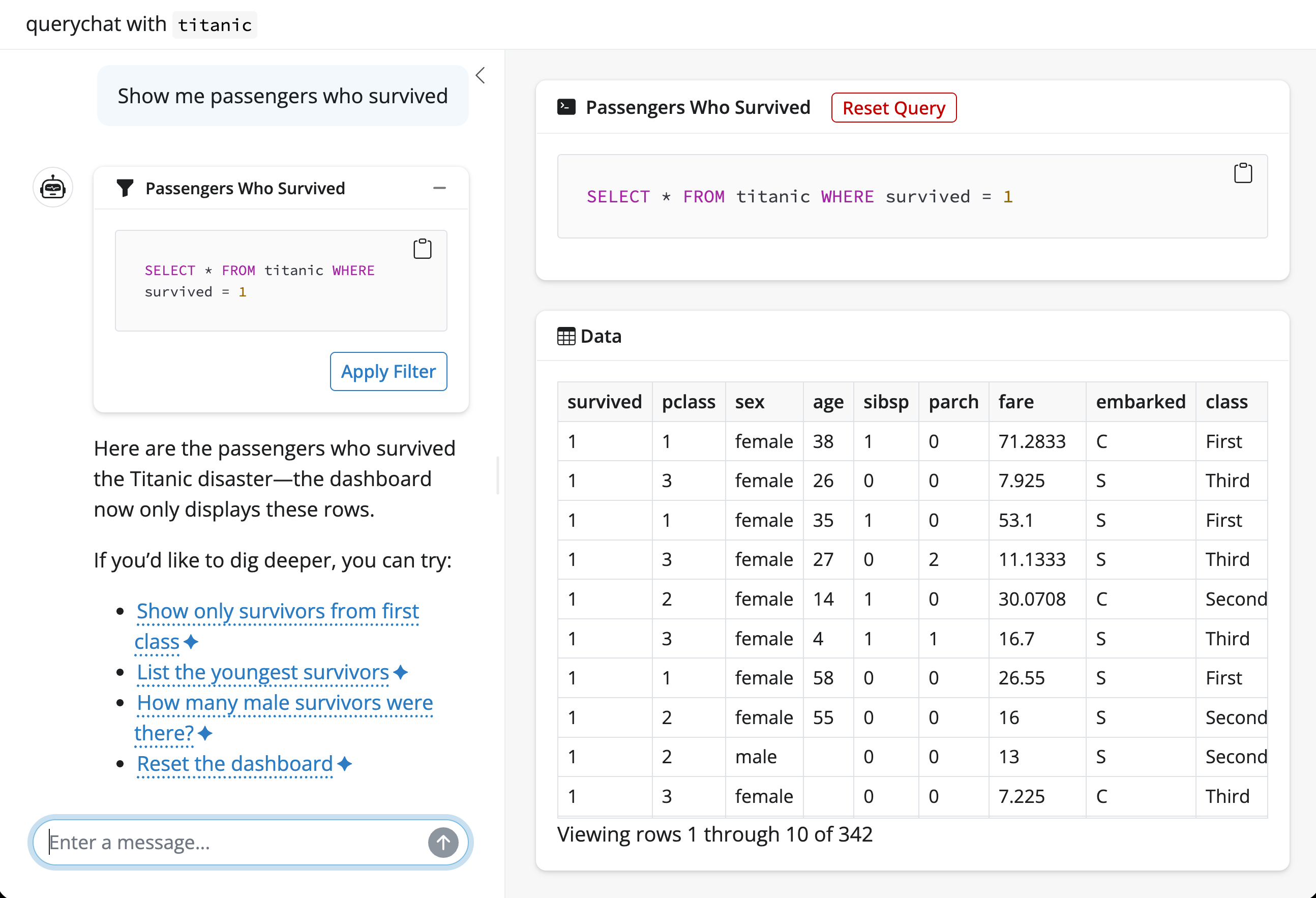
Chat with your data in R and Python with querychat

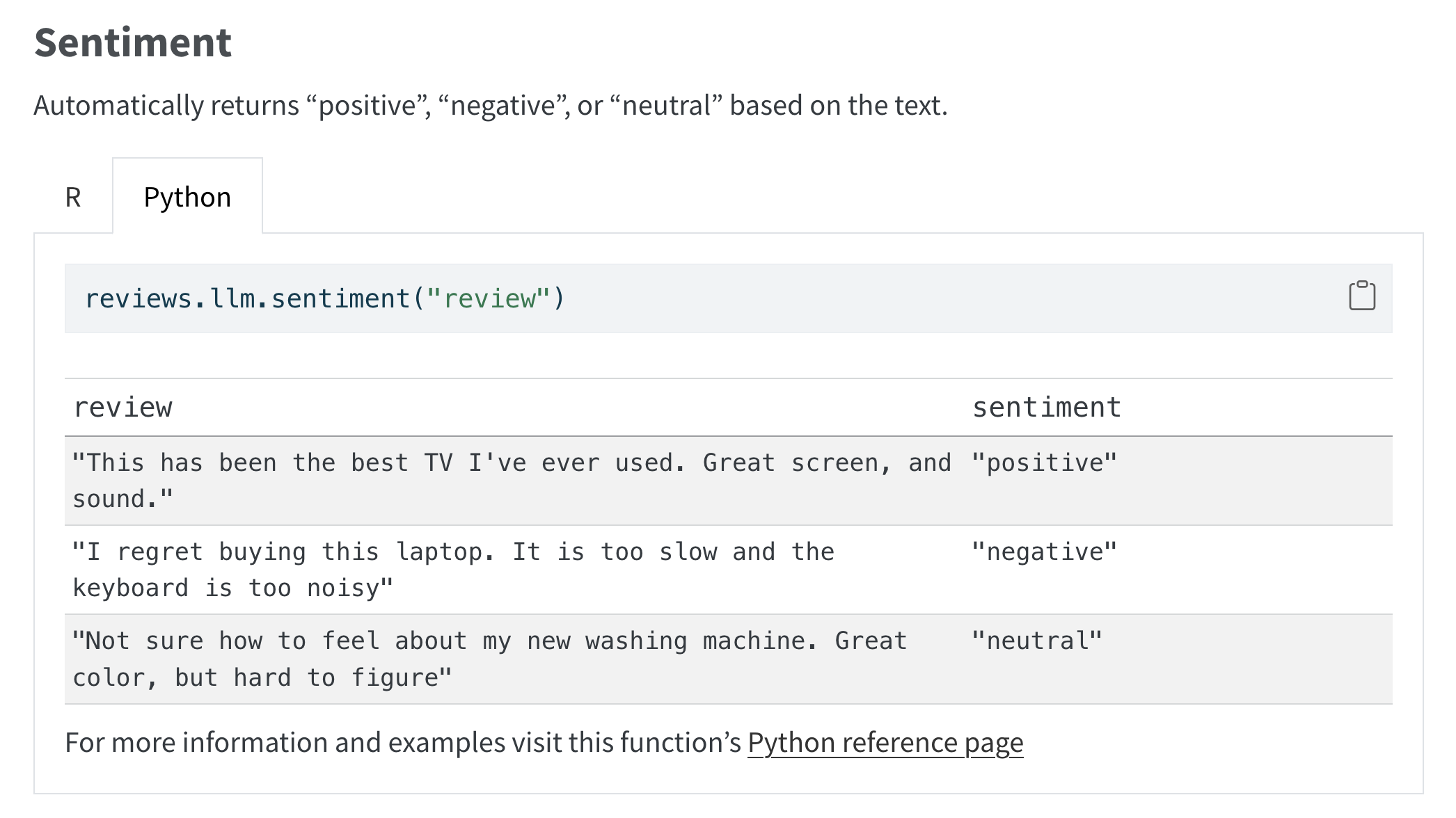
Natural Language Processing (NLP) with mall

Next steps
- MCP (Model Context Protocol): Connect LLMs to data sources, APIs, and tools using a standardized protocol
- RAG (Retrieval Augmented Generation): Ground responses in your documents and knowledge bases
- Evals: Test and measure your LLM applications to ensure quality and reliability
Acknowledgements and resources
bit.ly/pyladies-monterrey-llms